Our fate is in our hands. Rome's was, too.
- Cary Reed
- Jul 16
- 4 min read
I don't buy the "great powers rise and fall like organisms" theory of history — Gibbon's ghost still haunts a lot of American anxiety about decline, and it's mostly wrong. Empires and civilizations don't have lifespans like people.
Countries are not people. Nearly all countries are born, and born in blood. But they don't necessarily mature, become powerful, or decline. They simply exist, their power and importance are only relative to their time and objectives they set out for themselves, and their declines are not the inevitable result of grand historical cycles. They have specific, avoidable failures.
So when I think about the current populist moments in the U.S., I'm not thinking "we're Rome, and this is our 130s BC. How do we slow our sad decline?" I'm thinking about something narrower and (I hope) more useful: what does a state's political system do when it can't resolve genuine popular grievance through normal channels, and how much damage does the failure to resolve it actually cause?
Rome is still useful here, but not as a mirror. As a contrast. For nearly two centuries after the Conflict of the Orders resolved in 287 BCE, Rome had no major episode of internal political violence. None. Real material and legal disputes between classes got negotiated into new offices, new laws, new rights.
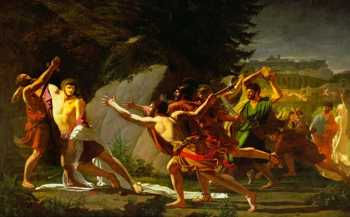
It wasn't until 133 BCE, when Tiberius Gracchus was clubbed to death by senators for proposing land reform, that Rome discovered its elites would rather kill a tribune than share power. Once that norm broke, the Republic never really recovered. The killing of the Gracchi made the next act of political violence easier, and the one after that, all the way to Caesar. But it didn't have to be that way.
The U.S. doesn't have anywhere close to two centuries of that kind of restraint. We get a civil war at under a hundred years, Reconstruction violently overturned within a decade of Black male suffrage, and a pattern of political killings and near-killings running from Lincoln through King through January 6th that suggests something more structurally brittle than Rome's early Republic. Not because we're further along some inevitable cycle, but because our institutions are, I think, worse at metabolizing this specific kind of pressure.
Part of that is the populism itself, which is arriving from two directions with almost nothing in common except the diagnosis that the system is failing people. The right's version leans heavily on cultural "restoration," most visibly, the claim that America was founded as a Christian nation, which is pretty absurd on the face of it. Building a governing program on a false history doesn't just fail on the merits; it tends to make the state predatory rather than protective. A movement organized around restoring something imaginary has to manufacture enemies to explain why the restoration keeps not happening. The left's version is more materially grounded — wealth concentration, wage stagnation, etc. — which is at least arguing about something real, even when the proposed fixes are likely to (like many projects springing from the left) have unintended harmful consequences.
But here's what worries me more than either flavor: populism, whichever direction it comes from, wants radical change delivered through fundamentally conservative instincts. A return to an imagined prior order, a restoration of a status quo ante that in most cases never quite existed. That's an internal contradiction that doesn't resolve cleanly. A movement that is revolutionary in method but restorationist in goal doesn't know what to do once it wins, because there's no coherent program behind "burn it down." Just nostalgia and anger.
And unlike Rome, whose consulship split executive power between two annually-elected men with mutual veto power specifically to prevent capture by any one faction or individual, the U.S. concentrates the entire executive branch in a single office, held by one person, for four years, answerable mostly to a two-party system that a well-organized populist movement can simply take over from the inside. That's not a Roman-style slow institutional decay. It's a single point of failure.
You don't need a Marius or a Sulla marching legions on the capital when the existing constitutional machinery hands one person that much power through an ordinary election.
So read The Decline and Fall of the Roman Empire, it's sort of a rite of passage, anyway. And note Gibbon's take on the role Christianity played in the events, which will highlight for you the contradiction between what the Christian nationals hope the role of Christianity would play in the United States and the philosophical grounding of the religion itself.
But also read of Edward Watts's Mortal Republic, which argues that Rome's collapse wasn't inevitable, but rather was the accumulated result of specific choices by specific people to prioritize short-term power over institutional health (eyebrow lifted at you, Sen. Mitch McConnell, or your ghost).
I found this more useful than any theory of decline, because it means the American story isn't written yet either--not all of it. It also means the danger isn't some vague cyclical doom. It's much more mundane and much more fixable: whether a two-party system and a single, powerful executive office can survive a genuinely radical movement that has learned how to win elections without ever agreeing to govern within the rules once it does.
This is a lot of what's driving the book I'm working on now, Blood and Ashes. More soon.


Comments